The Global Classroom Project connects children from rural areas with individuals and professionals from around the world. Governments have long tried to train teachers to teach better — we believe students learn just as much by being given the chance to interact directly with trainers, professionals, and peers from entirely different parts of the world.
As children build communication skills, linguistic range, and the confidence to share their own ideas, the Global Classroom starts to dissolve the socio-economic barriers that usually box them in. A child with no technology and no knowledge source at home suddenly has both — and the chance to use them.
The gap between urban and rural India is widening even as the country develops. eLMNOP exists to close the pedagogic gap between the two — digitally empowering rural schools and delivering real digital education to talented kids who'd otherwise never get the exposure.
There is measurable, large-scale demand for this: 1,500 identified villages are waiting for a Global Classroom — not for novelty, but because it directly improves communication skills, technical skills, soft skills, and academic performance for rural students.
A rural school is identified and shortlisted.
We meet the Sarpanch, the school Principal, and the Village Development Officer. The pitch is simple: developing the school develops the village.
Local corporates and government bodies fund hardware and connectivity. Cognizant, for example, has provided 10 high-configuration PCs for one pilot school.
Internet service providers are engaged and feasibility is checked on the ground.
An awareness program introduces teachers to the model and builds their confidence with it.
The classroom goes live, with teachers providing the follow-up that keeps students engaged and progressing.
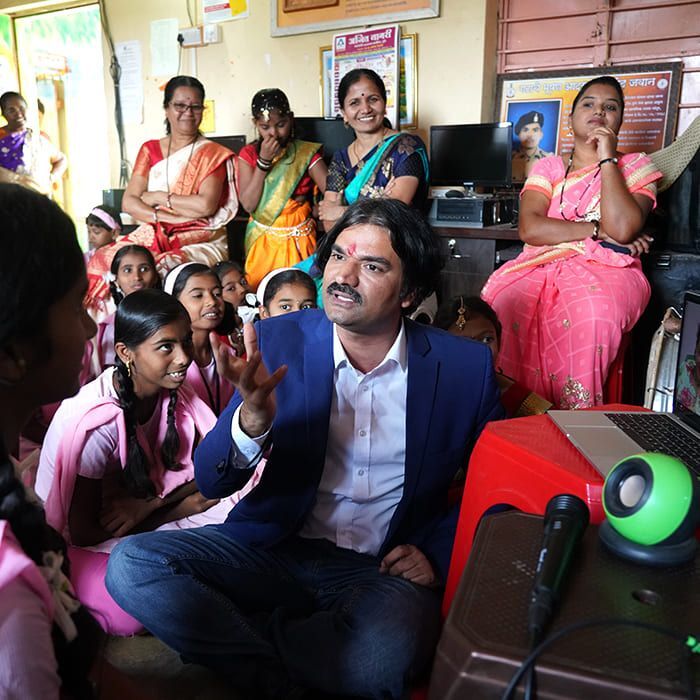
Live sessions for Standards 5–10 covering Mathematics, Science, English, IT, and Value Education — delivered with advanced ICT tools.
Interactive teaching methods, continuous comprehensive evaluation, co-curricular activities, ICT training, mass communication skills, and research methods.
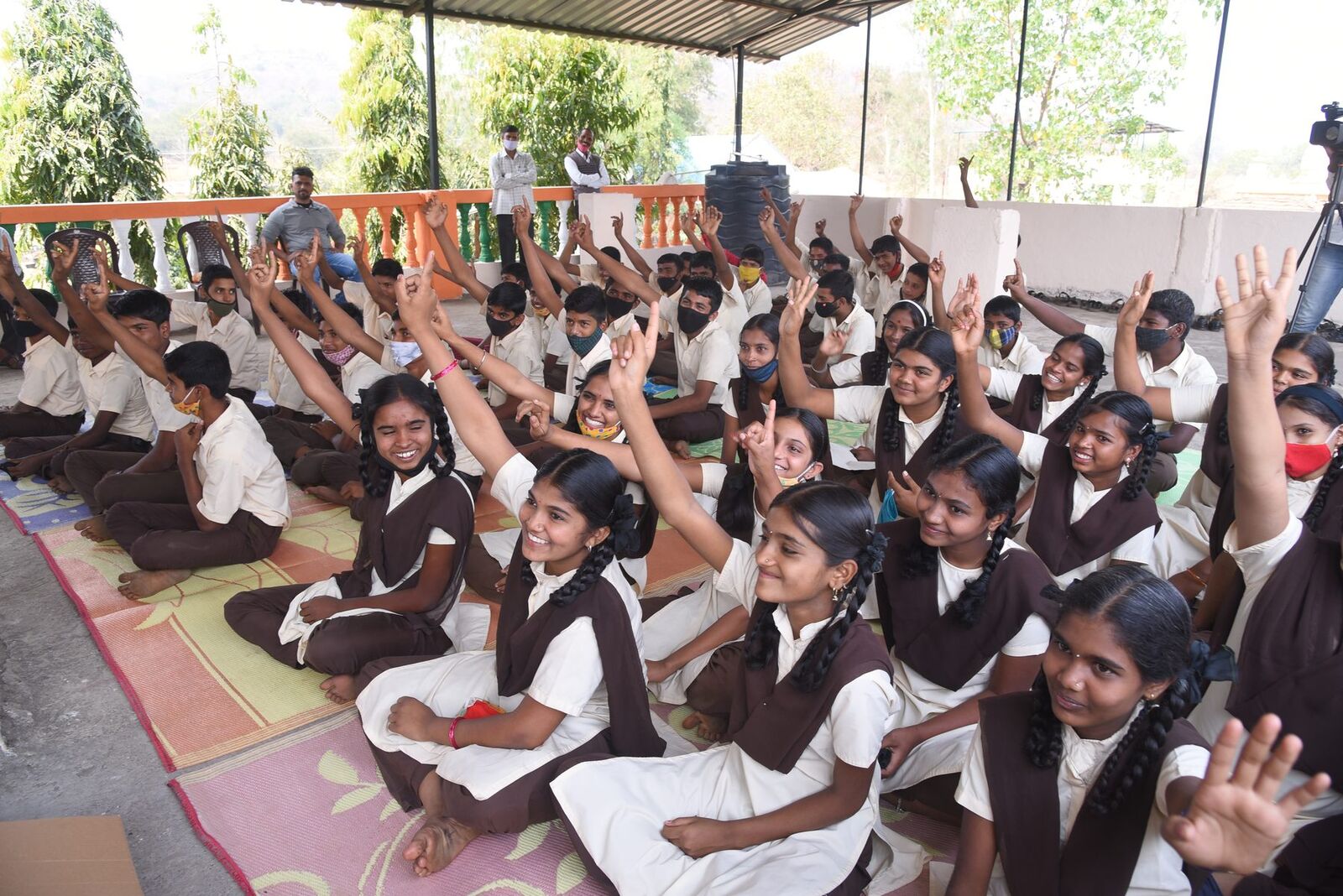
Competitions and collaborative student activities across schools, plus Girls Empowerment sessions and life-coaching programs.
Technology & connectivity. A Global Classroom only works if a school has real access to technology — and maintaining that equipment is its own ongoing challenge. Our answer is training: we teach students and teachers to use and maintain the technology themselves.
Follow-through. A single inspiring session with a global expert isn't enough — growth has to be monitored over time. That's the job of the classroom teacher, whom we equip and support to carry the relationship forward between sessions.
Global Classrooms connect rural Indian children to professionals worldwide regardless of physical ability, literacy level, gender, religion, culture, or economic background. As students build communication skills and the confidence to pursue their own ideas, the program cuts directly across the socio-economic barriers that usually determine who gets this kind of exposure — and who doesn't.
Case study library: the full Mulshi Taluka story — our proof that this model works — lives on the Impact & Partners page.